
7 Things I Wish I Knew Before Driving the Cabot Trail
We mostly planned our Maritime road trip based on this one famous drive: the Cabot Trail. I had seen SO many photos of the winding road along the coast in Cape Breton, with mountains on one side and the ocean on the other, and I knew I wanted to experience it for ourselves.
And the Cabot Trail absolutely lived up to the hype. The views were incredible, we hiked the famous Skyline Trail, spotted seals from the shore and made plenty of little stops along the way.
But the drive wasn’t exactly what I had pictured.
I imagined we’d spend most of the day driving right along the coastline, stopping at viewpoint after viewpoint. I also thought that once we arrived on Cape Breton Island, we’d pretty much be at the Cabot Trail.
Neither was really true.
There were actually quite a few things that surprised me once we started driving, from just how much time we spent in the forest to how much the fog could completely change the views. And travelling with kids added another layer to it. As beautiful as the Cabot Trail is, our boys don’t really care about spending hours in the car looking at scenic views.
So if you’re planning on driving the Cabot Trail, especially with kids, here are 7 things I wish I knew before our trip, plus a few things I’d do differently next time.
Disclaimer: Just a heads up, this free article contains affiliate links. If you purchase after clicking one of these links, I may earn a small commission at no additional cost. Your support helps me continue to provide helpful and free content for you.
What I Wish I Knew Before Driving the Cabot Trail
1. The Cabot Trail Is Only a Small Part of Cape Breton Island
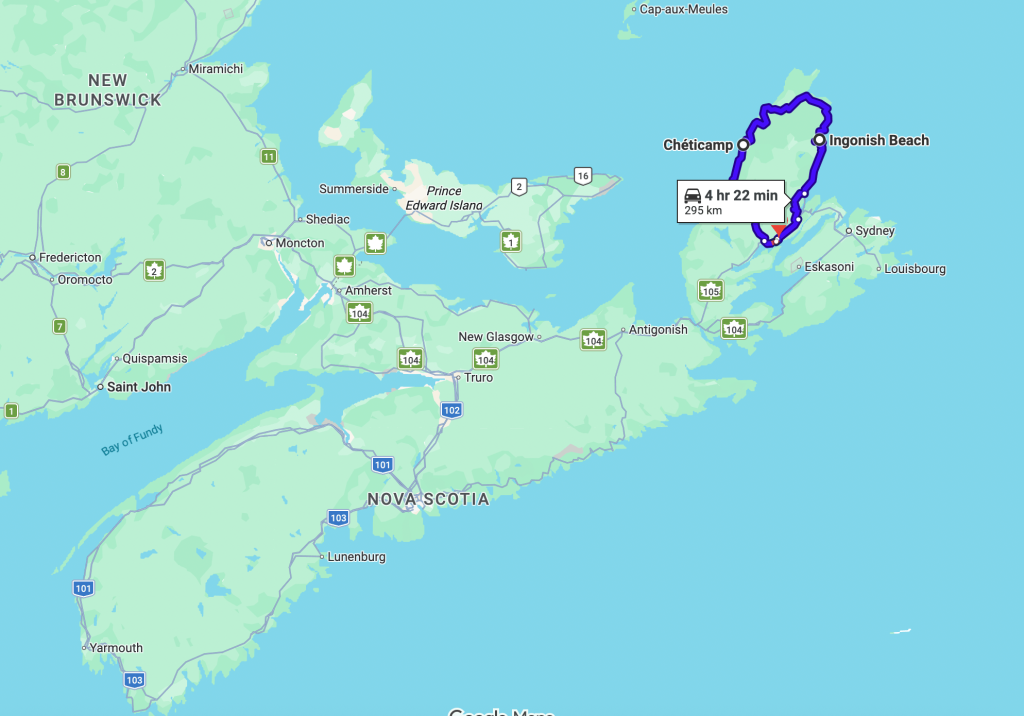
One of the biggest things I wish I had realized before our trip is that arriving on Cape Breton Island (in Port Hastings) doesn’t mean you’ve arrived at the Cabot Trail.
Cape Breton is much bigger than I pictured when I was planning our Maritime road trip.
Once you cross the Canso Causeway onto Cape Breton Island, you still have quite a bit of driving ahead of you before reaching the famous Cabot Trail. Both Chéticamp and Baddeck, two popular starting points for the drive, are more than 100 kilometres from Port Hastings, the entrance of Cape Breton).
I knew this when looking at Google Maps, of course, but I don’t think I fully appreciated what it would mean for our itinerary until we were actually there.
We had already done a lot of driving on our Maritime road trip (from Quebec to New Brunswick to Nova Scotia), and those extra kilometres add up quickly, especially with kids.
2. You Won’t Be Driving Along the Coast the Entire Time
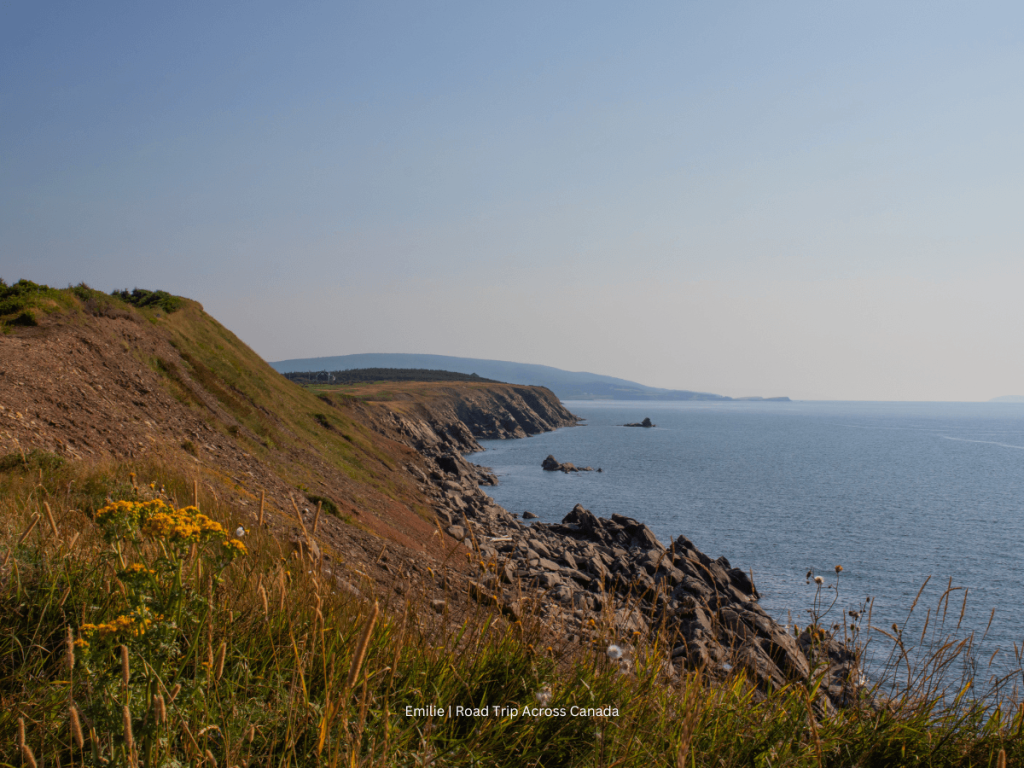
Before driving the Cabot Trail, I pictured hours of winding coastal roads with the ocean almost constantly beside us. That’s definitely not the reality.
There are some absolutely incredible sections where the road hugs the coastline and you get those classic Cabot Trail views you’ve probably seen all over Instagram. But a surprisingly large portion of the drive is through the forest, especially as you make your way through Cape Breton Highlands National Park.
At first, I kept thinking the next big ocean view must be just around the corner. And then we’d drive through more trees, a bit like driving in Northern Ontario (on a smaller scale).
That’s not to say the drive isn’t beautiful. It really is. But if you’re expecting uninterrupted coastal views for the entire Cabot Trail, you might be a little surprised like I was.
3. The Fog Is Part of the Cape Breton Experience
Did you know that Cape Breton is often associated with the idea of a “land of fog”? After our visit, that felt pretty fitting.
The fog is real, and it can completely change what you see while driving the Cabot Trail. Just look at this video of us driving from Ingonish to Baddeck. I can say that we DIDN’T see a thing on that stretch of the drive.
But that’s also just part of visiting Cape Breton.
The weather can change quickly, and a foggy stretch doesn’t necessarily mean your entire day will be like that. We are used to unpredictable weather as we live by the Canadian Rockies where you have to pack for all seasons even in the summer… but that’s still a bummer.
But with kids, there was actually an upside. They didn’t really care if a famous viewpoint was hidden in the fog. They were much more interested in getting out of the car, exploring the rocks, hiking or looking for wildlife anyway.
4. Don’t Plan the Cabot Trail Like a Regular Driving Day
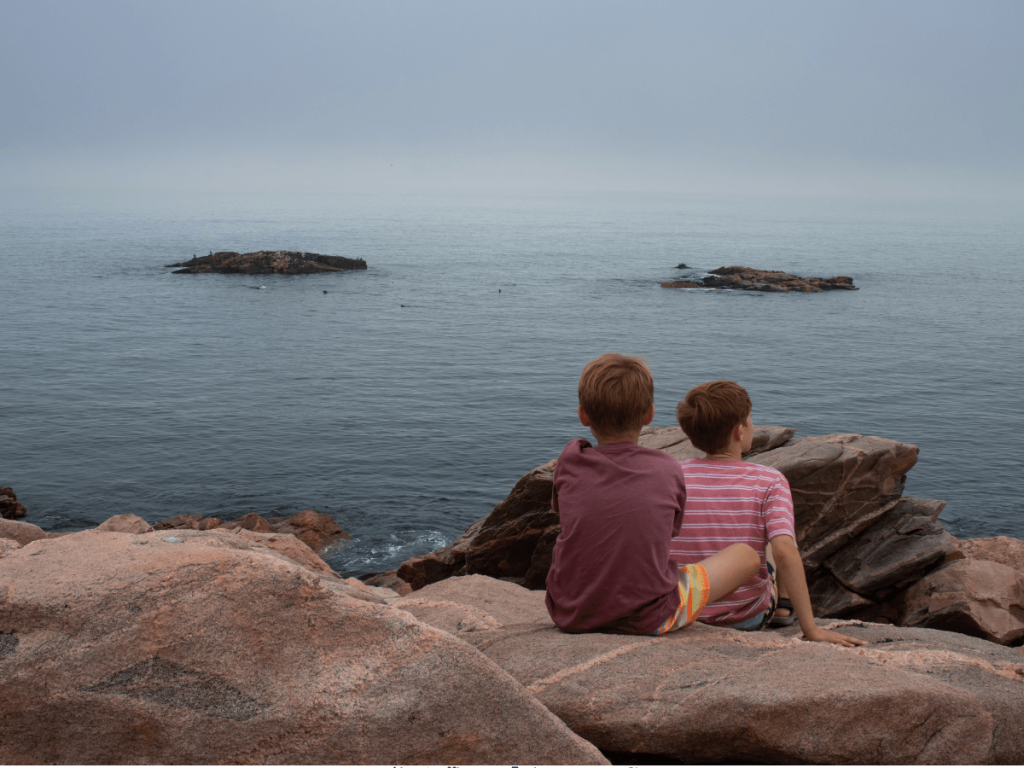
One thing I’ve learned from road-tripping with kids is that the driving time on Google Maps is almost never the actual amount of time we’ll spend getting somewhere. And that’s especially true on the Cabot Trail.
There are simply too many reasons to stop, but the road is also really windy (which means we need to slow down)
You’ll want to pull over at viewpoints, go for short hikes, explore beaches, stop for lunch and probably make a few unplanned stops when you see something interesting from the road.
And while we adults can appreciate driving along a beautiful road for hours, our kids really don’t care that they’re on one of Canada’s most scenic drives.
They need to get out of the car.
In fact, this was one of the biggest lessons from our entire Maritime road trip. We tried to fit WAY too much into some of our days. We planned scenic drives, attractions and tours, sometimes forgetting that the boys would have been perfectly happy spending an extra couple of hours climbing on rocks or playing at the beach.
5. The Skyline Trail Isn’t Actually a Coastal Hike
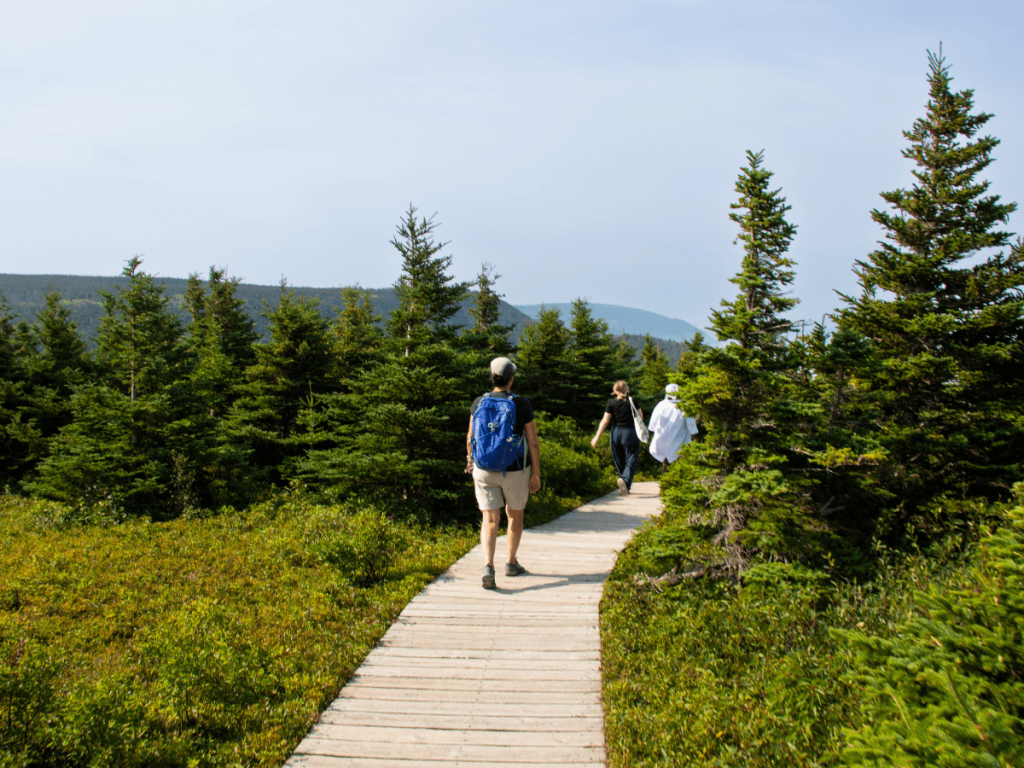
The Skyline Trail was one of stops I was most excited about on our entire Maritime road trip, and I would 100% do it again. But the hike itself wasn’t quite what I expected.
If you’ve seen photos of the Skyline Trail, you’ve probably seen the famous boardwalk descending toward the ocean with incredible views over the Gulf of St. Lawrence.
What you don’t see nearly as often is the rest of the trail (which is MOST of the trail).
For roughly two-thirds of our hike, we were walking through the forest. There aren’t constant ocean views, and for a good portion of the trail, you could almost forget that you’re hiking toward one of the most famous viewpoints in Cape Breton.
Then you reach the coastline, and suddenly it all makes sense.
The forest opens up when you reach the coastline, and the final section is completely different from the beginning of the hike. Even knowing now that most of the trail is wooded, I still think the Skyline Trail is absolutely worth adding to a Cabot Trail itinerary.
We also booked a 9:00 a.m. time slot, which worked really well for us. It meant we could hike early and then continue exploring the Cabot Trail afterwards instead of spending the entire morning watching the clock for a midday reservation.
6. You Don’t Have to Drive the Cabot Trail Counter-Clockwise
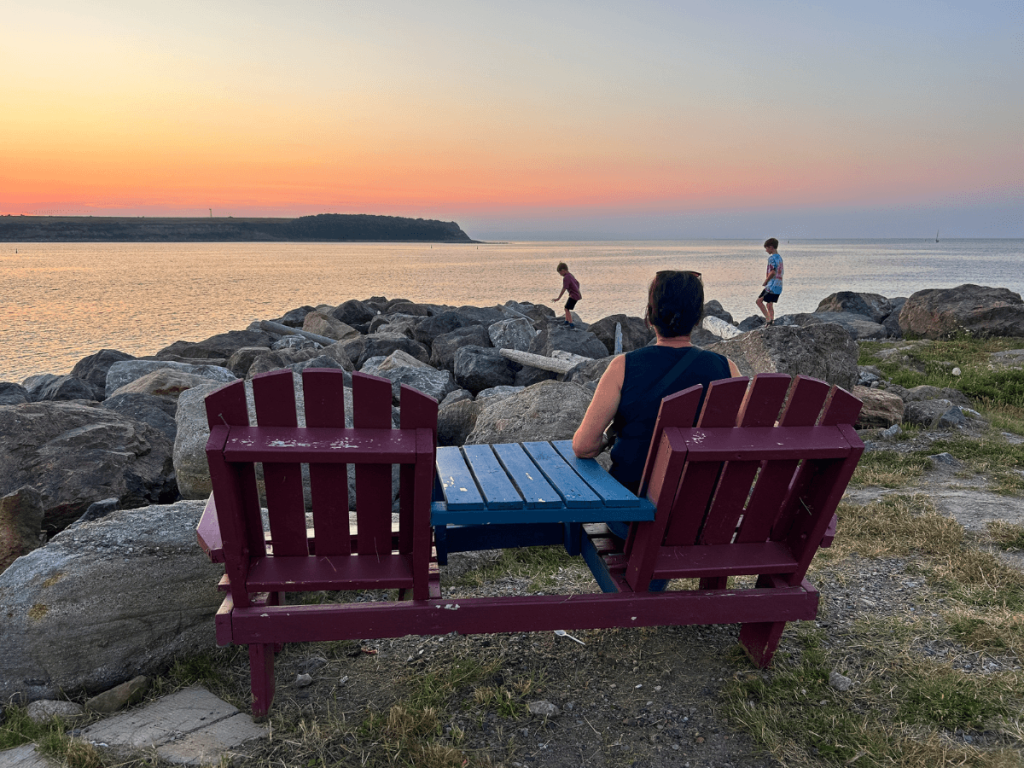
Before our trip, I kept reading that the “best” way to drive the Cabot Trail was counter-clockwise.
We did the opposite. We drove the Cabot Trail clockwise, and for our itinerary, it made so much more sense.
The main reason was the Skyline Trail. We had a reservation for 9:00 a.m. and stayed in Chéticamp the night before, which put us relatively close to the trailhead. We could wake up, have breakfast, drive to the trail and start hiking without already spending hours in the car.
After our hike, we simply continued clockwise around the Cabot Trail. And I’m really glad we planned it this way.
There are arguments for both directions, especially when it comes to which side of the road you’re on for certain coastal views. But after driving it ourselves, I wouldn’t build my entire itinerary around the idea that you have to go one particular way.
I’d build it around where you’re staying and what you want to do that day.
7. You Can See Seals From the Cabot Trail
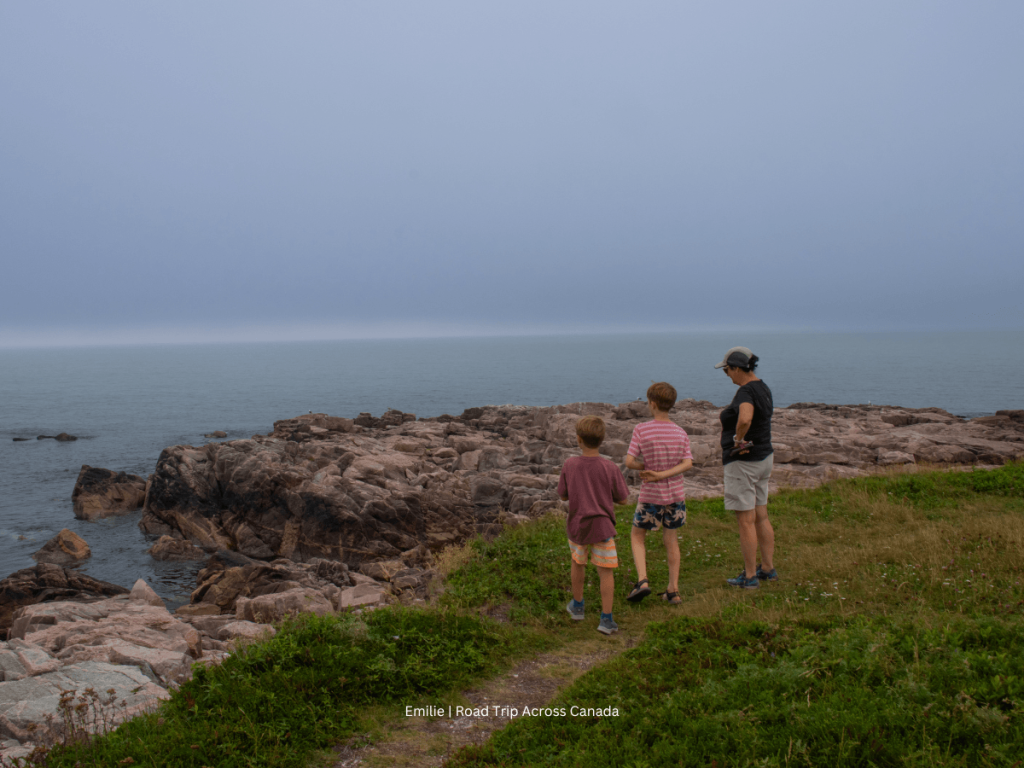
This was one of the biggest surprises of our Cabot Trail drive: you can spot seals right from shore. I think the best place to see them was Green Cove (it was at least for us!).
Green Cove is a quick stop along the eastern side of the Cabot Trail in Cape Breton Highlands National Park. There’s a short path that takes you out onto a rocky granite headland overlooking the ocean.
We originally stopped because it looked like a nice place to stretch our legs and explore the coastline. But once we got out onto the rocks, we started spotting seals in the water.
Of course, that immediately made the stop WAY more exciting for the boys.
It’s also a perfect example of why I wouldn’t overplan a day on the Cabot Trail. Green Cove isn’t a long hike or an attraction that you’d think needs hours of your itinerary…. Well we ended up staying there a good hour (instead of the 5 minutes I thought we could).
How Long Should You Spend Driving the Cabot Trail?
You can technically drive the entire Cabot Trail in one day, but I wouldn’t recommend experiencing it that way, especially with kids.
The Cabot Trail loop is just under 300 kilometres, but the driving distance doesn’t tell you much about how long you’ll actually want to spend exploring it.
For us, the whole point of driving the Cabot Trail was being able to stop along the way. We wanted to hike the Skyline Trail, explore places like Green Cove, stop at viewpoints and give the boys opportunities to get out of the car.
Trying to fit all of that into one day would have been too rushed… I would even say IMPOSSIBLE.
I’d recommend giving yourself at least two to three days to explore the Cabot Trail with kids. That doesn’t necessarily mean splitting the drive exactly in half. Instead, plan your days around the experiences that matter most to you and use the drive to connect them.
For example, we stayed in Chéticamp so we could hike the Skyline Trail first thing in the morning before continuing clockwise around the Cabot Trail. Having that overnight stop made the entire experience much more manageable.
FAQ About Driving the Cabot Trail
How long does it take to drive the Cabot Trail?
The Cabot Trail is just under 300 kilometres long, and it takes approximately 4 to 5 hours of actual driving time to complete the loop without significant stops.
But realistically, you’re not going to drive the Cabot Trail without stopping.
Once you add viewpoints, bathroom breaks, meals, short walks and all the random stops that come with travelling with kids, it can easily become a full-day drive.
And if you want to hike the Skyline Trail, visit waterfalls, spend time at a beach or explore some of the small communities along the way, I’d give yourself at least two days rather than trying to complete the entire Cabot Trail in one day.
Can you drive the Cabot Trail in one day?
Yes, but you’ll have to be selective about where you stop. If your goal is simply to complete the scenic drive and stop at a few viewpoints, one day can work.
With kids, I’d rather have more time. Once you add the Skyline Trail, Green Cove, viewpoints, meals and time to simply get out of the car and explore, one day can become very rushed.
Is the Cabot Trail a difficult drive?
There are winding roads, hills and some steep sections along the Cabot Trail, so it’s definitely not the same as driving on a straight highway. Take your time, especially when visibility is reduced by fog, and use the designated pullouts when you want to enjoy the views.
We didn’t find the drive itself to be a reason to avoid the Cabot Trail.
Where should you stay when driving the Cabot Trail?
Chéticamp, Ingonish and Baddeck are two popular bases for exploring the Cabot Trail, but I’d choose your accommodation based on what you want to do the following morning.
We stayed in Chéticamp before our Skyline Trail hike, and I’d make the same choice again. Being relatively close to the trailhead made our 9:00 a.m. reservation much easier and meant we could start exploring early instead of spending the first part of our day driving.
When is the best time to drive the Cabot Trail?
Summer is a popular time to drive the Cabot Trail because you can combine the scenic drive with hiking, beaches and other outdoor stops. We visited in summer, so I can’t personally compare our experience with driving it during the other seasons. But I’ve seen photos of the trail in the fall, and it looks absolutely beautiful.
Though, what I can say is that even in summer, you shouldn’t assume you’ll have perfectly clear views. Fog can roll in and completely change what you see, so I’d leave some flexibility in your itinerary rather than planning your entire trip around one perfect scenic driving day.
Final Thoughts on Driving the Cabot Trail
Driving the Cabot Trail was one of the experiences we were most looking forward to on our Maritime road trip, and even though it wasn’t exactly what I had pictured, I’m so glad we planned our Cape Breton visit around it.
The biggest thing I wish I’d known? Don’t rush it.
The Cabot Trail isn’t 300 kilometres of non-stop ocean views. There will be forests, fog and plenty of driving in between those incredible coastal sections. But there will also be little stops you didn’t expect, wildlife sightings, beautiful hikes and places where you’ll want to stay much longer than planned.
