
2026 Canada Road Trip Budget Guide (Family Edition)
Dreaming of a Canadian road trip but worried about the cost? Building a realistic Canada road trip budget is the first step to turning that dream into an adventure your family can actually take.
Canada is vast, and costs can vary significantly depending on the region, season, and travel style. Gas prices, park passes, and accommodations all play a big role in your trip cost, and it’s easy to feel overwhelmed if you’re not sure what to expect.
We’ve been there ourselves. After years of planning family road trips across the country, we’ve learned how to keep adventures exciting without draining the savings account.
This guide is for families who want to know how to travel across Canada on a budget, without missing the fun. We’ll share up-to-date prices, from gas and groceries to park passes and accommodations, so you’ll know exactly how much a trip to Canada costs and how to keep it manageable.
👉 Want help? Download our free Canada itinerary template and check out our full Canada Road Trip Guide + Map to plan your adventure with confidence.

Disclaimer: Just a heads up, this free article contains affiliate links. If you purchase after clicking one of these links, I may earn a small commission at no additional cost. Your support helps me continue to provide helpful and free content for you.
🗒️ Quick Recap: Canada Road Trip Budget 2026
Planning a Canadian road trip with your family in 2026? The biggest costs are gas, accommodations, and food. Camping runs about $35–$60 per night, Airbnbs average $170–$220, and hotels sit around $200–$250. Families usually spend $300 per week on groceries or about $70 for lunch and $120 for dinner at restaurants.
In 2025, renting a car is usually the cheaper and simpler choice. A compact car starts at around CAD $55–$80 per day, while a family-friendly SUV or minivan runs between CAD $90–$150. The daily RV rental rates in 2025 range from CAD $180–$300 for a mid-size RV that sleeps a family of four, and up to CAD $400 for larger units.
The best way to save? Mix camping with Airbnbs, cook simple meals instead of eating out every day, and plan for free activities like hiking, beaches, and festivals. A Parks Canada Discovery Pass ($151 per family) covers national park entry, while apps like GasBuddy and Splitwise help track spending on the go.
How Much Does a Canada Road Trip Cost in 2026?
So, how much does a trip to Canada cost in 2026? The answer depends on your travel style, the region you visit, and the season. To help you plan your budget, here are the average costs families can expect this year.
Accommodation Costs
Where you sleep each night can take up a big part of your road trip budget. The good news is that Canada has a wide range of options, from budget-friendly campsites to cozy Airbnbs and full-service hotels.
Quick Recap
⛺ Camping: CAD $35–$60 per night for a family (Parks Canada or provincial sites are on the low end, private campgrounds are on the higher end – and even more).
🏡 Airbnb: CAD $170–$220 per night for a family apartment or small house (plan more in cities like Vancouver, Toronto, Banff).
🏨 Hotels: CAD $200–$300 per night for a mid-range room (more in Banff, Vancouver, or Toronto).
💡 Money-saving tip: Mix camping with Airbnb nights for a balance of savings and comfort.
Camping
If you’re trying to keep costs low, camping is the most affordable choice. In 2025, a campsite in a national or provincial park usually costs CAD $35–$60 per night. These sites often feature fire pits, picnic tables, and access to washrooms, with some offering RV hookups. Private campgrounds can be a bit pricier but may come with extras like Wi-Fi and laundry.
Airbnbs
Airbnbs are a comfortable middle ground. Renting an entire apartment or small house typically runs CAD $170–$220 per night in most parts of Canada. This option gives families space to spread out, cook meals, and sometimes even enjoy perks like laundry or a backyard. In big cities or tourist hubs like Banff or Vancouver, prices can be higher, but in smaller towns, they can also dip below $150. But, with the cleaning fees, it’s not the best option for single-night stays.
Hotels
Hotels remain the most straightforward option but usually come at a higher price. A mid-range hotel room costs about CAD $200–$250 per night in 2025, though popular areas can push well past $300 during summer. The convenience of daily housekeeping, on-site restaurants, and amenities like pools can be worth the splurge for some families, especially on longer trips.
💡 To save on accommodation, book early, especially for summer weekends in popular areas. Travelling in the shoulder season (spring or fall) can also bring down prices. Families with travel points or loyalty rewards can stretch their budgets even further.
Food Costs
Quick Recap
🛒 Groceries: About CAD $300 per week for a family of four. Cooking at campgrounds or Airbnbs helps stretch your budget.
🍟 Restaurants: Expect CAD $70 for lunch and CAD $120 for dinner for a family of four at casual places (no or limited alcohol). In tourist hot spots, add 15–20%.
💡 Money-saving idea: Pack a cooler bag and reusable lunch gear so you’re not forced into pricey roadside meals. Cook at campgrounds or Airbnbs to stretch your food budget.
Food is one of the easiest places for costs to creep up on a family road trip. Eating out for every meal adds up fast, especially in tourist areas. The good news? With a little planning, you can balance restaurant treats with grocery shopping and keep your Canada trip on a budget.
In 2025, groceries for a family of four cost about CAD $300 per week. Stocking up at supermarkets like Real Canadian Superstore, Safeway, or Walmart is much cheaper than grabbing last-minute snacks at gas stations or tourist shops. Families staying in campgrounds or Airbnbs can save a lot by cooking simple meals like pasta, BBQ, or sandwiches for the road.
Restaurant prices vary across the country, but here are the averages you can expect:
- Lunch (family of 4): around CAD $70 at a casual restaurant or a bit less in a fast-food spot.
- Dinner (family of 4): around CAD $120 at a sit-down restaurant. In busy hubs like Banff or Vancouver, it can easily reach $150–$200 with drinks and extras.
Of course, one of the joys of a Canadian road trip is tasting regional foods. Think poutine in Quebec, lobster rolls in the Maritimes, or butter tarts in Ontario. We recommend budgeting for a few special meals, but not making dining out your daily routine.
Recap of the costs for lodging and food
- Budget travel in Canada: camping, groceries, free activities.
- Mid-range: Airbnbs, mix of groceries and restaurants, some paid attractions.
- Comfortable: hotels, guided tours, daily dining out.
| Lodging | Food | Total | |
| Budget (low) | $245 | $350 | $595 |
| Budget (high) | $420 | $350 | $770 |
| Mid-range (low) | $1190 | $850 | $2240 |
| Mid-range (high) | $1540 | $850 | $2390 |
| Comfortable (low) | $1400 | $1330 | $2730 |
| Comfortable (high) | $2100 | $1330 | $3430 |
💡 If you’re trying to do Canada on a budget, and you’re travelling with kids, you should aim for the middle ground. Mix in camping with a few Airbnb nights, cook most meals, and focus on free or low-cost activities like hiking, beaches, or festivals. This balance keeps costs down without feeling like you’re missing out.
Next, we’ll dive into each major expense: transportation, rentals, accommodations, food, and attractions, so you can see where to save and where to splurge.
Vehicle Rental / RV Rental
One of the biggest decisions is whether to:
- rent a car and stay in hotels or Airbnbs,
- or go for the full RV experience.
Both can work well for families, but the costs and comfort level are quite different.
In 2025, renting a car is usually the cheaper and simpler choice. A compact car starts at around CAD $55–$80 per day, while a family-friendly SUV or minivan runs between CAD $90–$150.
Add in fuel, which is much lower than an RV, and this option makes sense if you’re planning to move between cities or want easy parking and smoother driving days. Of course, you’ll need to budget for hotels or Airbnbs, but this trade-off often balances out when gas prices are high.
RV and campervan rentals have their own appeal. They turn the road trip into part of the adventure itself, especially for kids who love the idea of “home on wheels.” Daily rental rates in 2025 range from CAD $180–$300 for a mid-size RV that sleeps a family of four, and up to CAD $400 for larger units.
On top of that, you’ll need to factor in campground fees ($35–$60 per night) and much higher gas costs (roughly $900+ for a two-week trip versus $350–$500 in a car). For families who want to cook their own meals, wake up in national parks, and cut down on restaurant spending, the RV can still make financial sense.
| Car + Hotels/Airbnbs | RV/Campervan |
| ✅ More comfortable driving, especially long distances ✅ Less fuel cost ✅ Easier to explore cities or take day trips ❌ Accommodation costs are higher than at campsites ❌ Packing/unpacking when changing hotels | ✅ Accommodation and transportation in one ✅ Cook your own meals on the road = food savings ✅ Fun experience for kids, like a rolling home ❌ High rental + fuel costs ❌ Parking challenges in cities ❌ Must book campgrounds early in busy areas |
Attractions & Activities
One of the best parts of a Canadian road trip is how much there is to see and do — and not everything comes with a big price tag. Families can mix free outdoor fun with a few paid highlights to keep the trip memorable without overspending.
💡 Money-saving tip: Pick one or two “splurge” experiences per region, and fill the rest of your days with hikes, swims, and free events. This keeps your Canada road trip budget balanced.
National Parks & Passes
If you’re visiting multiple national parks, the Parks Canada Discovery Pass is the best value in 2026. It costs CAD $151.25 for a family or group (up to 7 people in one vehicle) and gives unlimited access to more than 80 parks and historic sites across the country. Without the pass, daily entry fees are about $22 per family, which adds up quickly on a long trip.
Provincial parks also charge entry or parking fees, usually $10–$20 per car per day, or you can buy seasonal passes if you’re staying longer.
Museums & Tours
- Royal Tyrrell Museum (Drumheller, Alberta): $50 for a family of 4.
- Capilano Suspension Bridge (BC): $150 for a family.
- Canadian Museum of History (Ottawa): $55 for a family.
- Whale-watching tours (Atlantic Canada or BC): $300–$400 for a family.
These big-ticket activities can quickly add up, so it’s worth picking a few that fit your family’s interests and skipping the rest.
Free (or Almost Free) Activities
Canada makes it easy to enjoy free adventures:
- Hiking trails in both national and provincial parks.
- Beaches and lakes, perfect for swimming or paddling.
- Free summer festivals and outdoor concerts.
- Scenic drives (Icefields Parkway, Cabot Trail, Sea to Sky Highway).
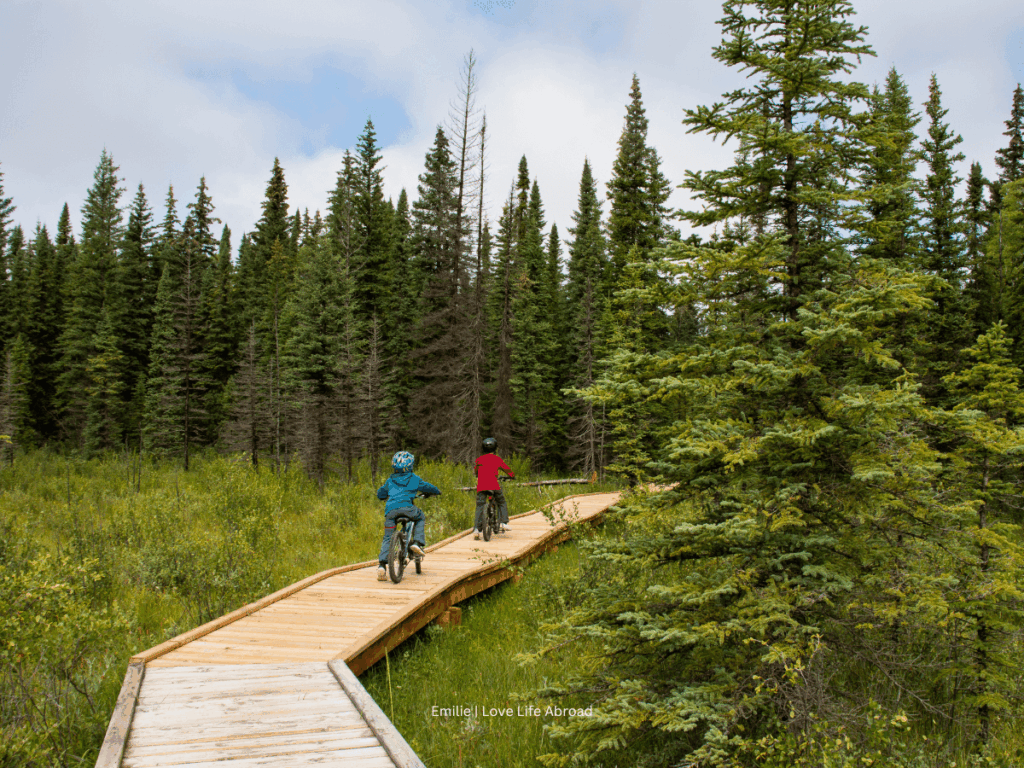
Kids often remember these simple moments like roasting marshmallows, skipping rocks, or biking a forest trail, just as much as the big attractions.
👉 Ready to hit the road? Grab our free Canada itinerary template and explore the Road Trip Guide + Map for step-by-step planning help.
Hidden / Overlooked Costs
When families ask how much a trip to Canada costs, they usually think of gas, food, and accommodations. But there are always smaller costs that sneak in along the way. Planning for them ahead of time can save frustration and keep your Canada trip on a budget.
Travel Insurance
If you’re coming from outside Canada, travel insurance is a must. Even Canadians travelling between provinces may want extra medical coverage. Family policies in 2026 cost around CAD $80–$150 for a two-week period.
Car Insurance Add-ons
Renting a car or RV? Watch out for insurance extras. Companies often push collision or liability coverage at the counter, which can add $20–$30 per day. Check if your credit card or existing auto insurance already covers this before you pay.
Data & Phone Plans
Road trips often mean driving through rural or remote areas where roaming charges or extra data costs pile up. If you’re visiting from outside Canada, you might need to purchase an international data plan. There are a few eSIM card providers like Airalo or GigSky that offer good data plans. You can budget between $20–$60, depending on the amount of GB you want and the length of your stay.
Apps like Google Maps or Spotify can eat through data quickly, so download offline maps and playlists before you go.
Souvenirs & Small Treats
From maple syrup to T-shirts to toy moose, souvenirs can be tempting. Even small roadside stops add up, especially when ice cream for a family of four is easily $20–$30. Budgeting $100–$300 for fun extras keeps these little purchases guilt-free.
Miscellaneous Fees
Parking and park access are easy to overlook. Many Canadian cities charge $10–$30 per day for parking, and some attractions add extra parking fees on top of entry tickets. For example, the parking lot at Lake Louise in Banff National Park is now $37 for the day.
Also, provincial and national parks often require a daily vehicle pass, usually $10–$20 per car, while the Parks Canada Discovery Pass (CAD $151.25 per family) is the best value if you plan to visit multiple national parks.
Add in ferry fees (BC, Newfoundland, PEI bridge) and tolls, and these small charges can quickly stack up. We paid about $150 one-way to get on the ferry from Vancouver to Vancouver Island.
💡 Money-saving tip: Set aside a small “fun fund” for roadside snacks, coffee breaks, or local goodies. That way, you can say yes without worrying about breaking your budget.
👉 Save time (and money) on planning. Get your free Canada itinerary template and check out our detailed Road Trip Guide + Map for routes, tips, and budget hacks.
How to Save Money (2026 Family Travel Tips)
Travelling as a family doesn’t have to mean overspending. With a little planning, you can explore Canada comfortably while still keeping your budget in check. Here are some tried-and-true ways to stretch your dollars in 2026.
1. Travel in Shoulder Season
Spring (May–June) and fall (September–October) are great times for budget travel in Canada (and it’s my favourite time to visit the Canadian Rockies). Campgrounds and hotels are easier to book, rates are lower, and attractions are less crowded. You’ll also avoid the summer rush at national parks.
2. Stay Longer in One Place
Constantly moving eats up money on gas and nightly accommodations. By staying a few nights in one location as a home base, you save on both fuel and time. Kids also appreciate the slower pace. You’ll spend a bit more on gas, but there will be some overall savings.
3. Mix Camping with Hotels or Airbnbs
Camping keeps costs down, while a few hotel or Airbnb nights give you comfort and convenience. If you’re driving, this balance makes a road trip more enjoyable and still affordable.
4. Use Loyalty Points and Memberships
Aeroplan, hotel rewards, and credit card points can go a long way when used for flights, hotels, or even car rentals. Memberships like CAA/AAA often include discounts on hotels, attractions, and car rentals.
5. Cook More, Eat Out Less
Cooking at campgrounds or in Airbnb kitchens can save hundreds of dollars on a two-week trip. Save restaurant visits for special meals, like trying poutine in Quebec or fresh lobster in Atlantic Canada. You can also prepare basic meals in a hotel room (and find hotels that offer complimentary breakfast).
🥪 Always bring a cooler even when staying at hotels. It’s nice to be able to store your lunch. We always bring our Chilly Moose 16L cooler when we do road trips. That way we can leave the big cooler at our lodging and carry only our smaller cooler for picnics)
6. Pack Road Trip Snacks & Gear
Buying snacks and drinks at gas stations is expensive. Pack a cooler with fruit, sandwiches, and reusable water bottles (I love my tumbler from Chilly Moose, it’s always in the car with me. It’s a 900 ml tumbler, so good size for road tripping) . Small things like camp stoves, travel mugs, and reusable cutlery also save money (and reduce waste).
👉 Ready to hit the road? Grab our free Canada itinerary template and explore the Road Trip Guide + Map for step-by-step planning help.
Best Apps & Tools to Track Your Road Trip Budget
A well-planned Canada road trip budget only works if you can keep track of your spending on the road. Luckily, there are plenty of apps in 2026 that make it easy to save on gas, plan routes, and manage costs for the whole family.
GasBuddy
Helps you find the cheapest gas stations nearby. With prices ranging between $1.30–$1.90 per litre in 2025, even small savings add up over a 2-week trip.
Roadtrippers or Google Maps
Both apps are excellent for planning routes, estimating drive times, and marking attractions or rest stops. Roadtrippers is great for family-friendly trip inspiration, while Google Maps works offline (a lifesaver in rural areas).
👉 If you’re planning a road trip across Canada, you’ll want to get my Canada road trip map.
Splitwise or TriCount
Those apps are great if you’re travelling with friends or relatives. It helps track shared costs, such as groceries, gas, or accommodations, so no one has to do math on vacation or spend half their trip discussing finances. Everyone inputs their spending (and who to share them with) and the app does all the calculations to know who owes money to whom at the end of the trip.
FAQs about Road Trip Costs in Canada
Is it cheaper to drive or fly across Canada?
For families, driving is almost always cheaper than flying, especially when you factor in multiple tickets and the car or RV rental. A mix with camping or Airbnbs can keep costs low, while flights for four people plus car rentals and accommodations quickly add up.
How much does gas cost in Canada in 2026?
In September 2025, the average price of regular gas is $1.43 per litre, with higher prices in British Columbia and remote areas. Apps like GasBuddy help families save on fuel as part of their budget travel plan in Canada.
How much does a 2-week Canada road trip cost for a family of 4?
A two-week trip can range from $1,950 (camping and groceries) to $9,000+ (hotels, restaurants, tours). Most families fall somewhere in the middle, around $5,000–$6,000, when mixing accommodations, cooking some meals, and choosing a few paid activities.
Can you camp for free in Canada?
Yes, but options are limited. Free camping, known as Crown Land camping, is allowed in many provinces but usually are in more remote locations. There are a few road stop across Canada where you can park for the night. You can check on the iOverlander or Park4Night. You will need to pay for national or provincial park campsites, which run $35–$60 per night. This is still one of the best ways to explore Canada on a budget. Or you can stay in unique locations at a minimal cost with Harvest Hosts.
Final Thoughts
A Canadian road trip doesn’t have to be out of reach. The key is building a realistic Canada road trip budget before you go. Once you understand the big expenses (gas, food, accommodations, and attractions), it’s easier to decide where to save and where to spend.
Add in a small buffer for the hidden costs, and you’ll avoid surprises along the way.
Most importantly, remember that a road trip is about more than the dollars spent. Kids will remember biking through a forest, roasting marshmallows by the fire, or spotting wildlife on the side of the road just as much as the big-ticket attractions.
So start planning now. Map out your route, set your budget, and get ready for wide-open roads, incredible landscapes, and family memories that last a lifetime.
👉 Want help? Download our free Canada itinerary template and check out our full Canada Road Trip Guide + Map to plan your adventure with confidence.
