
14+ Best Icefields Parkway Stops (With Map)
The Icefields Parkway is one of the most beautiful scenic drives in the world. This famous highway connects Lake Louise in Banff National Park to Jasper, stretching about 230 km through glaciers, turquoise lakes, waterfalls, and dramatic mountain scenery.
We drive this road a few times a year with our kids and I just can’t get tired of it. It’s so beautiful!
But if you’re planning the drive, you might wonder what are the best Icefields Parkway stops? There are dozens of viewpoints and hikes along the road, and it’s easy to miss some of the best ones if you don’t plan ahead.
It’s why I’m sharing the best Icefields Parkway stops (including a map with the stops), a few of the most rewarding hikes in the drive and a simple 1-day itinerary to make the most of this scenic Alberta drive.
Disclaimer: Just a heads up, this free article contains affiliate links. If you purchase after clicking one of these links, I may earn a small commission at no additional cost. Your support helps me continue to provide helpful and free content for you.
Icefields Parkway Map With Stops
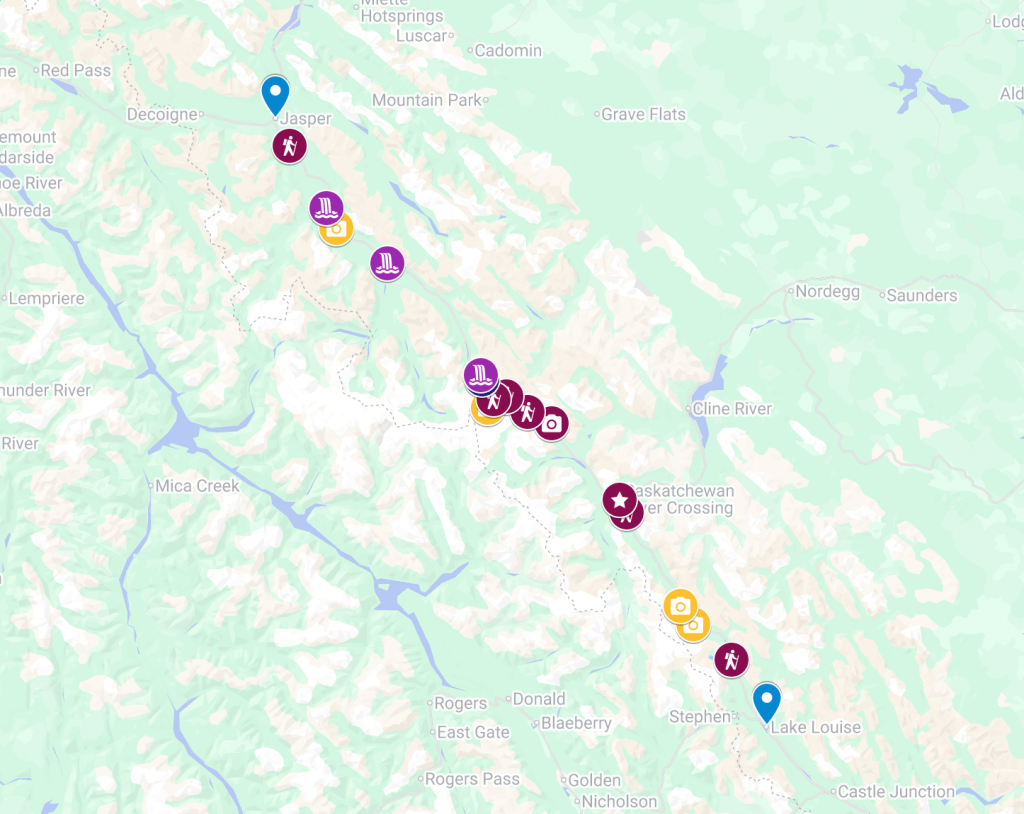
You can also download my FREE interactive Icefields Parkway map with all these stops included. Each location comes with quick notes and tips, and the map is fully compatible with Google Maps, which makes it perfect to use on your phone during your road trip.
👉 Download the Icefields Parkway map and save on your phone for your Canadian Rockies road trip
Best Stops on the Icefields Parkway (South to North)
Driving the Icefields Parkway from Lake Louise to Jasper means you’ll encounter some of the most beautiful landscapes in the Canadian Rockies. Lakes, glaciers, waterfalls, and dramatic mountain valleys appear one after another along the road.
Below are some of the best Icefields Parkway stops, ordered from south to north. This order also works well if you are planning an Icefields Parkway itinerary starting from Lake Louise to get to Jasper.
1. Bow Lake
📍 40 km from Lake Louise
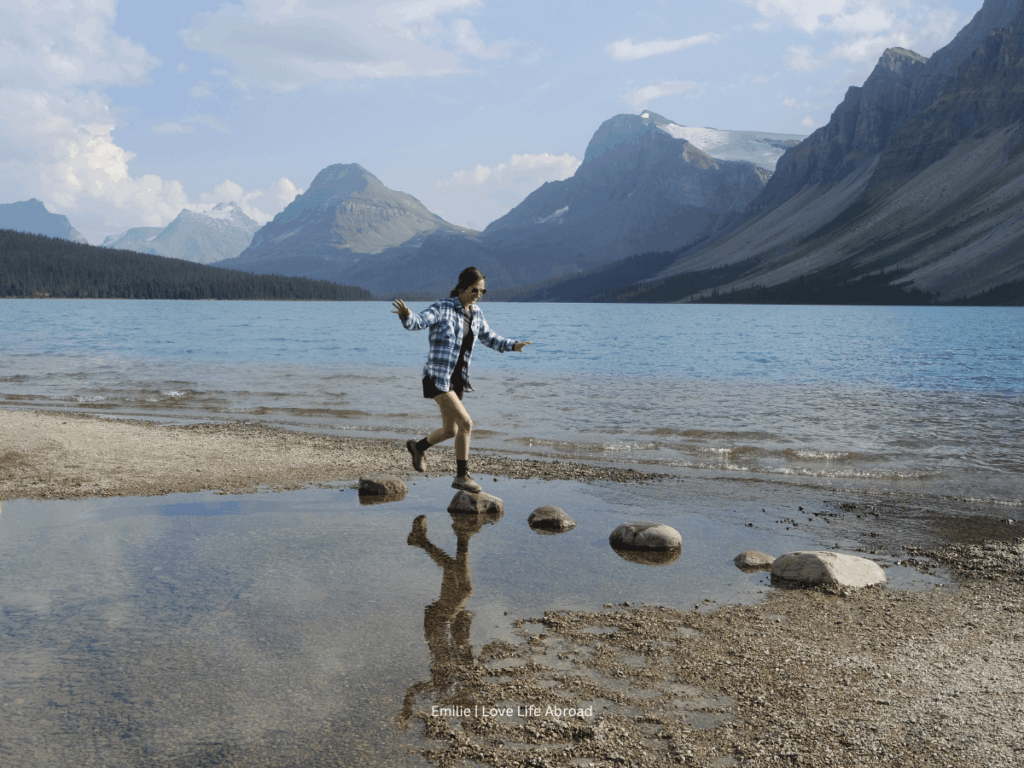
Bow Lake is easily one of my favourite stops on the Icefields Parkway. We always end up staying longer than planned.
The lake sits right beside the road. It is fed by meltwater from the Bow Glacier. On clear days, the turquoise water reflects the mountains almost perfectly.
There is a small parking area beside The Lodge at Bow Lake, a historic red-roofed lodge built by mountain guide Jimmy Simpson in the 1920s. Inside the lodge you’ll find Provision Co., a seasonal coffee shop (formerly the Hanging Glacier Café). This is usually our first stop. We grab a coffee and then walk down to the lake.
From the lodge, a short and easy path follows the shoreline. The views of Crowfoot Mountain and Mount Jimmy Simpson are incredible from here.
My kids love this stop because there are lots of little places to explore along the water. We always end up walking across the small wooden bridge near the outlet of the lake. There are also a few rocks just offshore where you can step out carefully and take fun photos standing above the water.
If you have time, plan to spend at least an hour here.
🥾 Looking for one of the longer Icefields Parkway hikes? The Bow Glacier Falls Trail begins from this area. The trail is about 9 km round trip and leads to a powerful waterfall at the base of the glacier.
2. Peyto Lake
📍 44 km from Lake Louise
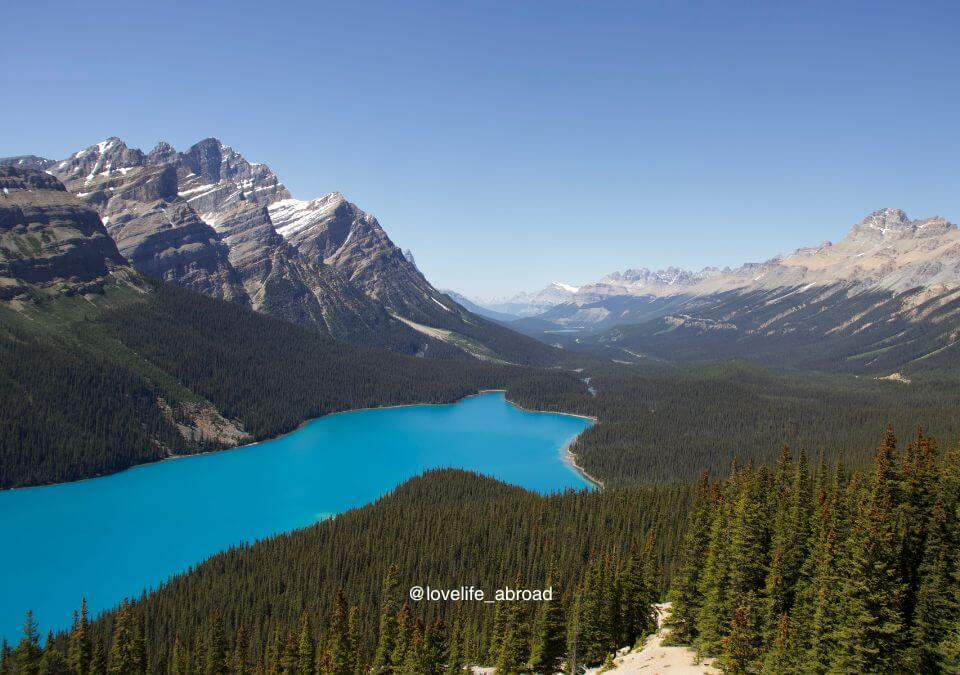
If there is one stop on the Icefields Parkway that almost every traveller remembers, it’s Peyto Lake.
This glacier-fed lake is famous for its bright turquoise colour and its unique shape, which many people say looks like a wolf’s head. It is one of the most photographed lakes in the Canadian Rockies, along with Moraine Lake.
The viewpoint sits at Bow Summit, the highest point along the Icefields Parkway at 2,088 metres above sea level.
From the parking lot, a short but surprisingly steep paved path leads to the main viewing platform. The trail is about 1.3 km round trip through a subalpine forest.
One important thing to note here is that you should always stay on the viewing platform. Please respect the signs and do not walk below the wooden deck. The slopes are fragile and dangerous.
💡 Peyto Lake is one of the busiest stops on the Icefields Parkway. The parking lot often fills between 10 a.m. and 4 p.m. during summer, especially in July and August. If you want a quieter experience and better light for photos, try to visit early in the morning or later in the afternoon.
3. Weeping Wall
📍 106 km from Lake Louise
The Weeping Wall is one of the easiest stops along the Icefields Parkway because you don’t even need to leave your car to admire it.
This massive limestone cliff is covered with thin waterfalls that stream down hundreds of metres along the rock face. The water comes from melting snow and underground springs high above the valley.
From the highway, the entire wall appears streaked with water, which gives the formation its name.
There is a small roadside pullout where you can safely stop for photos.
The Weeping Wall is most impressive in late spring and early summer when snowmelt is strongest and the waterfalls are flowing heavily.
4. Columbia Icefield
📍 136 km from Lake Louise
🥾 Distance: 1.4 km out and back | Elevation gain: 60 m
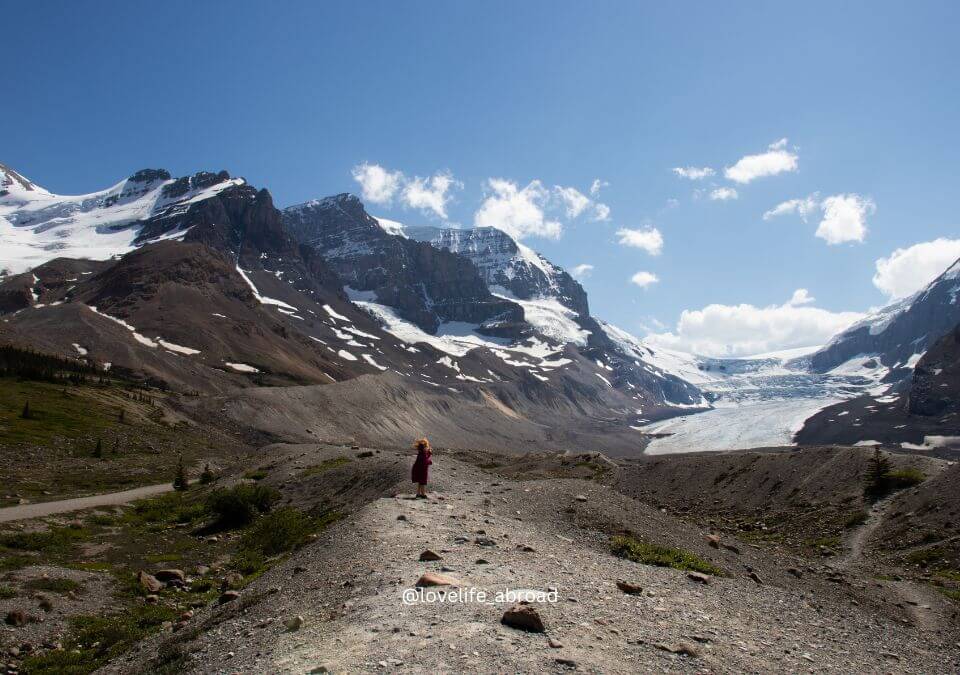
The Columbia Icefield is one of the most impressive places along the entire Icefields Parkway.
This massive icefield is the largest icefield south of the Arctic Circle, feeding several major glaciers including the famous Athabasca Glacier.
Standing at the base of the glacier is an incredible experience. It really shows the scale and power of the landscape.
One of the best ways to explore the area is the Toe of the Athabasca Glacier Trail. This short and family-friendly trail is about 1.4 km round trip and leads to a viewpoint close to the glacier.
As you walk along the trail, you’ll pass markers showing how far the glacier once extended. Seeing how much it has retreated over the past century is a powerful reminder of how quickly the landscape is changing.
Across the road you’ll find the Columbia Icefield Discovery Centre, which has washrooms, a café, and exhibits explaining the geology of the region.
In summer, you can also book snowcoach tours that drive directly onto the glacier.
I’ll be honest here. This is one of the few attractions in the Canadian Rockies where I personally have mixed feelings.
After visiting the glacier several times and seeing how quickly it is retreating, it’s hard not to pause when looking at the markers that show where the ice once reached. Because of that, I have always felt uncertain about joining a large vehicle tour that drives directly onto such a fragile environment.
The Columbia Icefield Skywalk is another attraction many travellers ask about. I have personally never been able to justify the cost. The Icefields Parkway already offers some of the most spectacular glacier views in the world, and most of them are completely free.
👉 Get tickets for the Columbia Icefield Skywalk
Interestingly, the attraction was originally called the Glacier Skywalk, but because the glacier views are limited, the name was later shortened to simply Skywalk.
Many travellers still enjoy these activities, and they may be worth it for some visitors. But if you are travelling on a budget or prefer lower-impact experiences, there are plenty of incredible stops along the Parkway that cost nothing.
5. Tangle Creek Falls
📍137 km from Lake Louise
Tangle Creek Falls is a beautiful multi-tiered waterfall that cascades right beside the highway.
This is another very easy stop along the Icefields Parkway because the waterfall is visible directly from the road.
Water flows down several rock layers before disappearing under the road and reappearing on the other side of the highway, where it continues as Tangle Creek.
There is a small parking area on the opposite side of the road. If you decide to stop, be careful when crossing the highway. Traffic moves quickly through this section of the Parkway.
6. Sunwapta Falls
📍 179 km from Lake Louise
🥾 Upper Falls viewpoint: 0.2 km from parking
🥾 Lower Falls hike: 1.3 km round trip | Elevation gain: 50 m
The Sunwapta Falls are fed directly by meltwater from the Athabasca Glacier, which means the river runs strong and cold, especially in late spring and early summer.
The name Sunwapta comes from the Stoney Nakoda word for turbulent water. Once you see the falls, the name makes perfect sense.
The Upper Falls viewpoint is only a few steps from the parking lot. A sturdy bridge crosses the canyon and provides a dramatic view of the water crashing through the narrow rock walls below.
If you have a bit more time, take the short trail to the Lower Falls. This hike is about 1.3 km round trip through the forest and tends to be much quieter than the upper viewpoint.
It’s a great way to enjoy the area away from the crowds.
Just a few minutes up the road you’ll also find Sunwapta Falls Rocky Mountain Lodge, which is a nice place to stop for coffee or lunch during your drive.
7. Goats and Glaciers Lookout
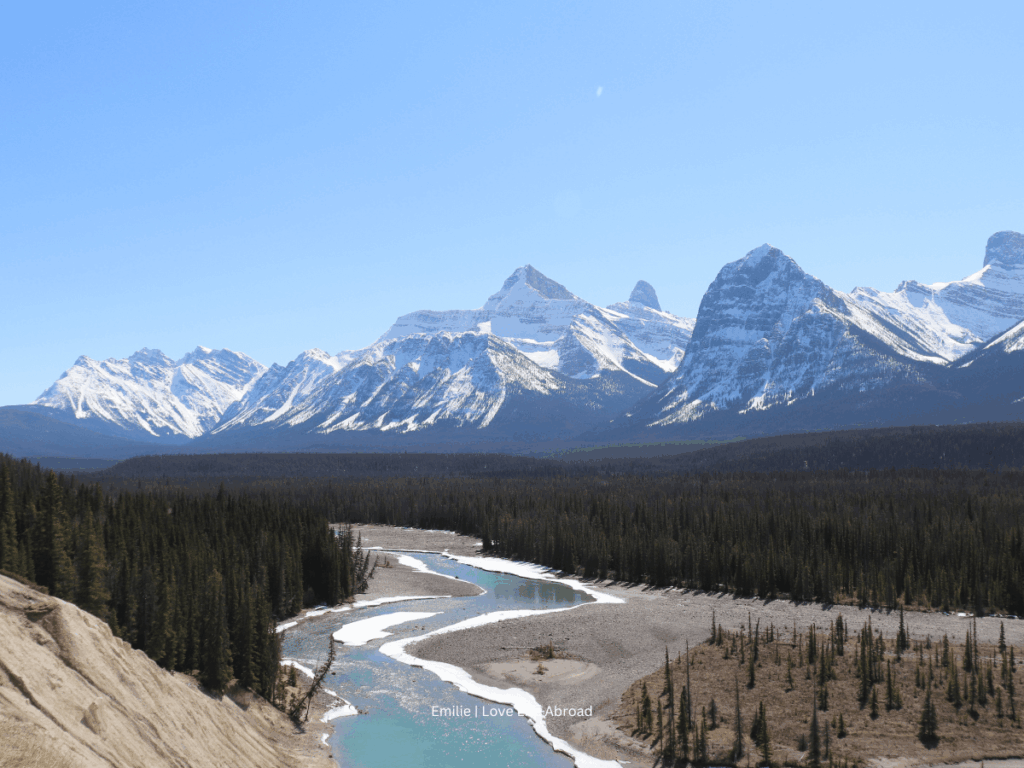
📍 195 km from Lake Louise
This is one of my little coup de cœur stops along the Icefields Parkway.
The Goats and Glaciers Lookout is easy to miss, but it’s absolutely worth pulling over for a quick break.
From the small parking area, a short path leads to a wooden viewing platform overlooking the valley. From here you can see rugged mountain peaks, hanging glaciers, and the turquoise ribbon of the Sunwapta River winding far below.
The viewpoint gets its name from the mountain goats that you can sometimes spot nearby. Early morning and evening tend to be the best times for wildlife sightings.
8. Athabasca Falls
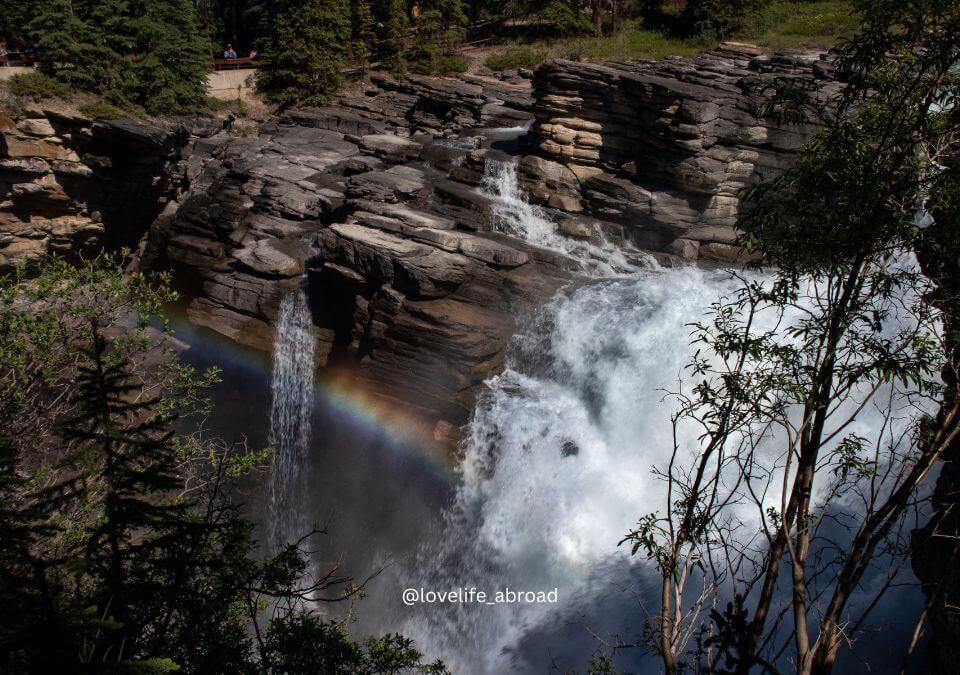
📍 200 km from Lake Louise
🥾 Distance: 0.8 km round trip
Athabasca Falls is one of the most powerful waterfalls in the Canadian Rockies.
It isn’t the tallest waterfall along the Icefields Parkway, but the sheer volume of water rushing through the narrow canyon makes it incredibly impressive.
The falls are fed by meltwater from the Athabasca Glacier, so the river runs strong throughout the summer.
The main viewpoint is just a short walk from the parking lot. From there, a network of short trails and bridges leads to several viewpoints overlooking the waterfall and the canyon.
The full walking loop is about 0.8 km round trip and is very easy.
As you explore the trail, you’ll see how the water has carved smooth channels into the rock before joining the Athabasca River below.
Best Icefields Parkway Hikes
While many viewpoints along the Parkway are just steps from the road, some of the most memorable experiences come from getting out of the car and exploring the trails. There are a few Icefields Parkway hikes that offer incredible views of glaciers, turquoise lakes, and deep mountain valleys.
Many of these trails are relatively short and easy to add to your Icefields Parkway itinerary, especially if you plan a few longer stops along the drive.
Here are some of the best hikes to consider.
9. Hector Lake
📍 22 km north of Lake Louise
Hector Lake is one of the first scenic stops after leaving Lake Louise, and it’s often overlooked by travellers rushing north.
The roadside pullout offers wide views across the Bow Valley toward Mount Hector, one of the most prominent peaks in the area. Hector Lake itself is the second-largest natural lake in Banff National Park, fed by glacial meltwater from the surrounding mountains.
From the viewpoint, you can simply admire the lake from above, or walk down toward the shoreline using the Hector Lake Trail.
The trail is about 4.5 km out and back and leads through forest and marshy terrain before reaching the lakeshore. It can be muddy, especially in spring and fall, and sections of the trail are not always obvious. I recommend downloading a GPS map before starting the hike.
The reward is a quiet lakeshore with incredible views of the surrounding mountains. Compared to some of the busier stops along the Parkway, Hector Lake often feels surprisingly peaceful.
10. Mistaya Canyon
📍 73 km north of Lake Louise, near Saskatchewan River Crossing
🥾 Distance: 1.9 km round trip
Mistaya Canyon is one of those hidden gems along the Icefields Parkway. It’s easy to miss if you’re driving quickly, but it’s well worth the short stop.
A 1.9 km round-trip hike leads from the roadside parking area to a narrow canyon carved by the powerful Mistaya River.
The trail begins with a gentle downhill walk through the forest. Within a few minutes, you’ll reach a sturdy stone bridge that crosses the canyon. From the bridge, you can see the river rushing through smooth limestone walls that have been carved by thousands of years of erosion.
The return hike climbs gradually back toward the parking lot, but it’s still a very manageable walk for most visitors.
Mistaya Canyon is often compared to Johnston Canyon in Banff, but it’s usually much quieter. In my opinion, it’s just as beautiful and far less crowded.
11. Parker Ridge Trail
📍 120 km from Lake Louise
🥾 Distance: 6.6 km round trip
🥾 Elevation gain: 345 m
If you have time for only one hike along the Icefields Parkway, Parker Ridge Trail is an excellent choice.
This hike offers one of the most spectacular glacier views in Banff National Park, and the payoff comes much sooner than many people expect.
The trail begins with a steady climb through alpine meadows. In summer, these slopes are often covered in wildflowers. The switchbacks make the ascent manageable, even for families with older kids.
As you gain elevation, the trees disappear and the landscape opens dramatically.
At the ridge, the view suddenly reveals the Saskatchewan Glacier, which flows down from the Columbia Icefield in a massive curve of ice and moraine.
The trail is exposed, so weather conditions can change quickly. Bring warm layers and be prepared for strong wind at the top. Even in July, snow patches often remain near the ridge.
12. Toe of the Athabasca Glacier Trail
📍 Columbia Icefield area
🥾 Distance: 1.4 km round trip
The Toe of the Athabasca Glacier Trail is one of the most accessible glacier hikes along the Icefields Parkway.
This short trail begins near the Columbia Icefield and leads toward the base of the Athabasca Glacier. Along the way, signs show where the glacier once extended decades ago. Walking past those markers really puts the scale of glacier retreat into perspective.
The trail itself is short and relatively easy, making it a good stop for families.
One important thing to remember is that conditions near the glacier can be very cold and windy. Even in the middle of summer, temperatures near the ice can drop quickly. Bring warm layers and a windproof jacket.
You should never walk directly onto the glacier without proper equipment and a guide. The ice surface contains deep crevasses that are not always visible.
13. Wilcox Pass
📍 137 km from Lake Louise
🥾 Distance to viewpoint: 3.1 km one way | Elevation gain: 390 m
🥾 Full hike: 9.5 km round trip | Elevation gain: 519 m
Wilcox Pass is another excellent hike near the Columbia Icefield and one of the most rewarding viewpoints along the Parkway.
Many hikers choose to walk only to the Wilcox Pass Viewpoint, which sits about 3.1 km from the trailhead. This section alone offers incredible views over the Athabasca Glacier and surrounding peaks.
At the viewpoint, you’ll find a pair of the famous Parks Canada red Adirondack chairs facing the glacier.
If you continue beyond the viewpoint, the trail leads farther into alpine terrain toward Wilcox Pass itself. This longer version of the hike covers about 9.5 km round trip and offers even wider views of the surrounding mountains.
The trail begins with a steady climb through forest before opening into alpine meadows. It’s a beautiful hike, especially in late summer when wildlife such as bighorn sheep are sometimes spotted in the area.
14. Valley of the Five Lakes
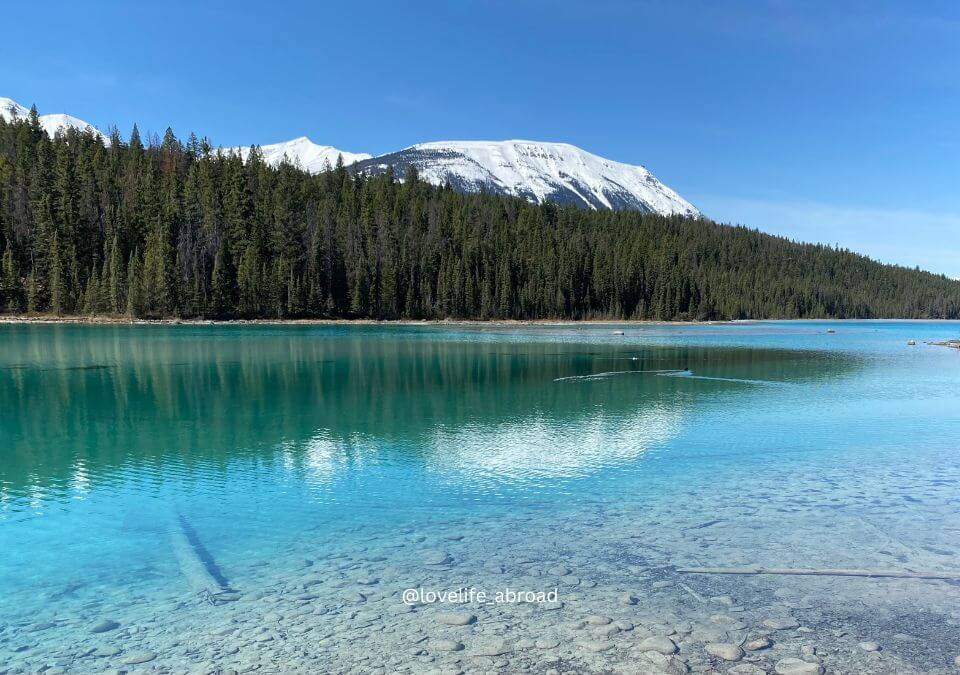
📍 Just south of Jasper
🥾 Distance: 4.8 km loop
🥾 Elevation gain: 163 m
The Valley of the Five Lakes is one of the most beautiful and family-friendly hikes near Jasper.
The trail forms a 4.8 km loop that passes five small lakes, each with a slightly different shade of blue or green. The route winds through forest before reaching the lakes one by one.
The third and fourth lakes are often the most striking, with vibrant colours that change depending on the light and time of year.
Along the trail you’ll also find one of the famous Parks Canada red chairs, positioned beside one of the lakes as a scenic resting spot.
Recent improvements to the trail include realigned sections, better surfaces, clearer signage, and new rest areas designed to improve accessibility and comfort.
⚠️ Important note:
Due to the 2024 Jasper wildfires, the Valley of the Five Lakes Trail and nearby areas sustained damage. The trail is expected to remain closed until at least 2026. Always check the latest updates on the Parks Canada Jasper National Park website before planning your visit.
Icefields Parkway Itinerary
1-Day Icefields Parkway Itinerary
If you only plan to drive the Icefields Parkway once, focus on a few key stops that give you a mix of lakes, glaciers, and waterfalls. Start early in Lake Louise and make your way north toward Jasper.
Your first stop should be Bow Lake, one of the most beautiful lakes along the Parkway. Park near The Lodge at Bow Lake, grab a coffee at Provision Co., and walk along the shoreline. The reflections of the surrounding peaks are stunning, and the short walk across the wooden bridge is a fun stop with kids.
A few minutes later, stop at Peyto Lake. The short but steep paved path leads to the famous viewpoint overlooking the bright turquoise lake. It’s one of the most photographed places in the Canadian Rockies, so arriving early helps avoid crowds.
Continue north to the Columbia Icefield and walk the Toe of the Athabasca Glacier Trail. This short hike leads toward the glacier and offers a close look at the ice and the landscape around it.
Before reaching Jasper, stop at Sunwapta Falls, where a short walk leads to a bridge overlooking the powerful waterfall. Then continue to Athabasca Falls, where several viewpoints show the river crashing through a narrow canyon.
If you still have time after arriving in Jasper, consider hiking the Valley of the Five Lakes, a beautiful loop trail passing five colourful lakes surrounded by forest.
2-Day Icefields Parkway Itinerary (Round Trip)
If you have two days, the best option is to drive the Icefields Parkway in both directions. This allows you to enjoy more stops without rushing and see the scenery from different perspectives.
On the first day, drive from Lake Louise to Jasper. Stop at Peyto Lake for the famous viewpoint, then continue to Bow Lake for a walk along the shoreline. Farther north, pull over briefly at the Weeping Wall before stopping at the Columbia Icefield to walk the Toe of the Athabasca Glacier Trail. Later in the day, visit Sunwapta Falls before arriving in Jasper.
On the second day, begin with a hike at the Valley of the Five Lakes near Jasper. Continue south to Athabasca Falls, then stop at the Goats and Glaciers Lookout for one of the most beautiful viewpoints along the Parkway. A little farther along, pull over at Tangle Creek Falls before hiking to the Wilcox Pass Viewpoint for stunning views of the Athabasca Glacier. Before finishing the drive, stop for coffee at Saskatchewan River Crossing before returning to Lake Louise.
Tips for Driving the Icefields Parkway
Driving the Icefields Parkway is an unforgettable experience, but a little preparation can make the trip much smoother.
Fill your gas tank before leaving Lake Louise or Jasper.
There is only one gas station along the entire route at The Crossing Gas Station and Store, located at Saskatchewan River Crossing where Highway 11 meets the Parkway. It usually operates from mid-April to mid-October and hours can be limited.
Download offline maps before your trip.
Cell service is almost non-existent along the Parkway. I usually download Google Maps offline and save trails in AllTrails so I can still check directions, distances, and trail conditions without signal.
Pack layers, even in summer.
Weather near the glaciers can change quickly. Even in July, temperatures around the Columbia Icefield can drop close to freezing and strong winds are common. Bring a warm fleece, a rain jacket, and a hat even if the day starts sunny.
Bring snacks and water.
Food options along the Icefields Parkway are limited. The Crossing Resort is the only reliable place for coffee or a sit-down meal, and it can get busy in summer. On most trips, we pack a picnic and stop at one of the lakes along the way.
Download the GuideAlong audio guide.
This is one of my favourite ways to experience the drive. The app shares stories about glaciers, wildlife, geology, and the Indigenous history of the region as you drive. It makes the road trip much more engaging, especially if you are travelling with kids.
👉 Download the GuideAlong audio guide.
Take your time.
The Icefields Parkway is not a road you want to rush. Plan a few longer stops, take short walks, and enjoy the views. The drive itself is the highlight.
FAQ: Driving on the Icefields Parkway
How long does it take to drive the Icefields Parkway?
Driving the Icefields Parkway from Lake Louise to Jasper without stopping takes about 3 hours. However, very few people drive it straight through. Plan to spend 5 to 7 hours on the road once you include stops at lakes, waterfalls, and viewpoints. If you plan to do a few short Icefields Parkway hikes or longer breaks, it can easily take a full day. If you have the time, spreading the drive over two days allows you to enjoy more stops without rushing.
Should you drive the Icefields Parkway north to south or south to north?
The truth is that the scenery looks incredible in both directions. The glaciers, valleys, and mountains reveal different perspectives depending on the direction of travel and the light. Driving south to north gives you classic views of Bow Lake and the Columbia Icefield as you approach them. Driving north to south can be slightly easier for stopping because many viewpoints are on the west side of the road. If your itinerary allows it, the best option is to drive the Icefields Parkway both directions.
Do you need a Parks Canada pass?
Yes. The Icefields Parkway runs through Banff National Park and Jasper National Park, so a valid Parks Canada pass is required. You can purchase a daily pass or an annual Discovery Pass at park gates, visitor centres, or online before your trip.
Can you drive the Icefields Parkway in winter?
Yes, the Icefields Parkway is open year-round. However, winter conditions can be challenging. Snowstorms, icy roads, and avalanche control work can lead to temporary closures. Before driving the Parkway in winter, always check road conditions on Alberta 511. Winter tires and extra preparation are required.
What are the best stops on the Icefields Parkway?
There are many beautiful viewpoints along the road, but a few stops stand out. Some of the best Icefields Parkway stops include Bow Lake, Peyto Lake, the Columbia Icefield, Sunwapta Falls, Goats and Glaciers Lookout, and Athabasca Falls. Even if you only stop at a handful of places, the drive itself is one of the most scenic experiences in the Canadian Rockies.
Conclusion
Driving the Icefields Parkway is easily one of the most memorable road trips in the Canadian Rockies. Between Lake Louise and Jasper, the road passes turquoise lakes, massive glaciers, waterfalls, and endless mountain views.
Even after driving it many times, I still find myself stopping more often than planned. A quick viewpoint often turns into a longer stop, a short walk along a lake, or an unexpected wildlife sighting.
If you plan your stops ahead of time and allow plenty of time for the drive, the experience becomes much more enjoyable. Whether you follow a simple Icefields Parkway itinerary, explore a few Icefields Parkway hikes, or just pull over whenever the scenery catches your eye, the journey itself is the highlight.
Take your time, stop often, and enjoy one of the most beautiful drives in Canada.
